© Brighteon.com All Rights Reserved. All content posted on this site is commentary or opinion and is protected under Free Speech. Brighteon is not responsible for comments and content uploaded by our users.
Opening a Can of Worms on Infectious Disease Susceptibility and Varied Immune Responses


188 followers
Follow
1
Share
Report
20 views • June 14, 2021
How many parasitic worms do you have in your gut, and how long have they been there? The answer comes with some surprising implications.
Tune in to discover:
What the “weep and sweep” immune response entails and how it works
What surprising tradeoff exists between reproductive abilities and the strength of immune responses to infectious diseases
What interactions occur between host microbiota and parasitic infections in the gut
Andrea Graham is a professor at Princeton University in the Department of Ecology and Evolutionary Biology whose work revolves around a simple question, with a not-so-simple answer: Why do hosts vary so much in their susceptibility to infectious disease and autoimmune disease?
Most of her research is on the parasitic worms that live inside the guts of over a billion animals worldwide, including humans. What dictates whether a host will immediately or very slowly detect the presence of these worms? And once they do detect them, what dictates whether the host is able to mount a strong or weak immune response?
Graham aims to answer these questions primarily by looking to the ecological and evolutionary roots of heterogeneity in immune response and susceptibility to infectious disease.
She shares with listeners some of her research findings, such as those from “re-wilding” experiments using inbred lab mice, deworming treatments used to discover how parasites interact with one another in the same host, and more.
Press play for all the details and learn more at http://algraham.princeton.edu/.
Tune in to discover:
What the “weep and sweep” immune response entails and how it works
What surprising tradeoff exists between reproductive abilities and the strength of immune responses to infectious diseases
What interactions occur between host microbiota and parasitic infections in the gut
Andrea Graham is a professor at Princeton University in the Department of Ecology and Evolutionary Biology whose work revolves around a simple question, with a not-so-simple answer: Why do hosts vary so much in their susceptibility to infectious disease and autoimmune disease?
Most of her research is on the parasitic worms that live inside the guts of over a billion animals worldwide, including humans. What dictates whether a host will immediately or very slowly detect the presence of these worms? And once they do detect them, what dictates whether the host is able to mount a strong or weak immune response?
Graham aims to answer these questions primarily by looking to the ecological and evolutionary roots of heterogeneity in immune response and susceptibility to infectious disease.
She shares with listeners some of her research findings, such as those from “re-wilding” experiments using inbred lab mice, deworming treatments used to discover how parasites interact with one another in the same host, and more.
Press play for all the details and learn more at http://algraham.princeton.edu/.
Keywords
FREE email alerts of the most important BANNED videos in the world
Get FREE email alerts of the most important BANNED videos in the world that are usually blacklisted by YouTube, Facebook, Google, Twitter and Vimeo. Watch documentaries the techno-fascists don't want you to know even exist. Join the free Brighteon email newsletter. Unsubscribe at any time. 100% privacy protected.
Your privacy is protected. Subscription confirmation required.
Recent News

Dietary defense: How three common foods fight wrinkles and dark spots from within
Cassie B.
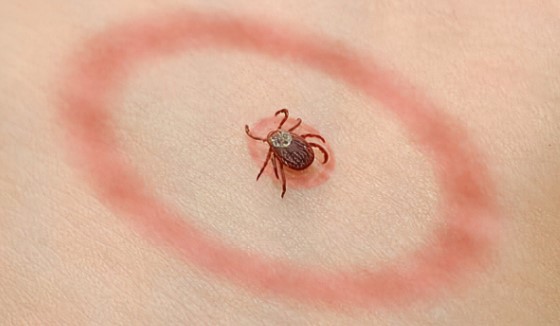
Declassified evidence links U.S. bioweapons program to Lyme disease epidemic
Kevin Hughes
Nutrition Experts Highlight Lettuce’s Place in Natural Health Diets, Citing Low-Cost Production and Essential Nutrients
Coco Somers
Gut health boost: 9 Prebiotic-rich snacks to nourish your microbiome
Evangelyn Rodriguez

The Chemical Castration of a Generation: Millennial Men Face a Testosterone Collapse
Morgan S. Verity

Study suggests cell towers are causing widespread immune system suppression, priming populations for sickness
Lance D Johnson
