© Brighteon.com All Rights Reserved. All content posted on this site is commentary or opinion and is protected under Free Speech. Brighteon is not responsible for comments and content uploaded by our users.
“Behold, the people shall rise up as a great lion..."

1915 followers
Follow
3
Share
Report
160 views • August 14, 2021
Numbers 23:24
“Behold, the people shall rise up as a great lion, and lift up himself as a young lion: he shall not lie down until he eat of the prey, and drink the blood of the slain.”
King James Version (KJV)
Rise like lions after slumber
In unfathomable number
Shake your chains to earth like dew
That in sleep have fallen on you
Ye are many, they are few.
O.D.D.'s "Rise Like Lions 432hz": https://soundcloud.com/overdosedenvermusic/10-rise-like-lions-432hz?in=deuce-rowe-1/sets/illuminati-psunami
https://www.counterfire.org/revolutionary/16066-rise-like-lions-after-slumber-revolutionary-shelley
That verse is perhaps one of the best known pieces of poetry in any movement of the oppressed all over the world. The Chartists knew it in the 19th century and so did the striking women garment workers in 1909 New York. It was chanted on demonstrations in Tiananmen Square (1989) and Tahrir Square (2011).
The last lines were adapted to ‘We Are Many’ by the campaign against the Poll Tax. The proposed film about the February 2003 Stop the War demo against the Iraq war is titled ‘We are the Many’. We recognise the reference as part of our working-class heritage.
The poet, Shelley, actually wrote, ‘Ye are many’ because he came from the few, but he wrote this poem especially for working people and he would have been very happy to know that it has become as well known and beloved as it is – even though, perhaps because, we have adapted the ‘ye’ into ‘we’.
Why do we love those lines so much? I think because, when we are beginning to fight back, they tell us what we are just beginning to feel, our strength. It should be, but it is not, obvious that ‘we are many, they are few’, and so we need to remember that we are not alone but part of the vast majority, and that being many we can win.
But we don’t always do that. For most of our lives we feel fragmented, cut off – we are divided from each other by ethnicity, sex, age or some other way in which the ruling class assures us that we are isolated and different from those we should be united with. When we are on a demo, when we know we are many, we see the truth of the lines and we know that we can rise like lions.
When Shelley wrote The Mask of Anarchy, in 1819, he would not have been on such a demonstration. He was in Italy. Yet he wrote the poem for English workers whose peaceful demonstration for the reform of the English parliament had been attacked by volunteer troopers. The atrocity became known as the Peterloo Massacre.
Although he was on the side of the Italian revolutionary movements and later supported the war for Greek independence, he was not active in either, unlike his friend and fellow poet Lord Byron. Shelley was not working class, though he had effectively excluded himself from the class he was born into, the ruling class.
So how did he know so well what the working class needed to know? How is it that he was able to come up with a poem which stated the obvious, in a way which is instantly recognised?
Emergence of a radical voice
Until he was 18, in 1810, Shelley was the cosseted son of a landed gentleman and MP who intended his son to follow in his footsteps. Shelley went to Eton and Oxford. In the holidays he shot snipe, skated, went to balls, theatre and opera (escorting his cousin, with whom he was in love).
He had read very deeply, and had taken a great interest in science, even conducting scientific experiments. His reading had included philosophy and he was already enquiring about the truth of Christianity. He had written a couple of novels and, with his sister, a volume of poetry. None of this made his family uneasy; in fact, his father encouraged an Oxford bookseller to ‘indulge him in his printing freaks’ and Shelley did publish, anonymously, another book of satirical poetry.
At the time, no one except those professing the beliefs of the Church of England was able to graduate from Oxford: Catholic Emancipation was yet to come, Protestant ‘dissenters’ like the philosopher William Godwin (author of Political Justice) were educated at their own colleges. When Shelley and his friend Thomas Jefferson Hogg wrote a pamphlet, The Necessity of Atheism, and sent it to the heads of the colleges and to bishops, they were expelled from Oxford.
“Behold, the people shall rise up as a great lion, and lift up himself as a young lion: he shall not lie down until he eat of the prey, and drink the blood of the slain.”
King James Version (KJV)
Rise like lions after slumber
In unfathomable number
Shake your chains to earth like dew
That in sleep have fallen on you
Ye are many, they are few.
O.D.D.'s "Rise Like Lions 432hz": https://soundcloud.com/overdosedenvermusic/10-rise-like-lions-432hz?in=deuce-rowe-1/sets/illuminati-psunami
https://www.counterfire.org/revolutionary/16066-rise-like-lions-after-slumber-revolutionary-shelley
That verse is perhaps one of the best known pieces of poetry in any movement of the oppressed all over the world. The Chartists knew it in the 19th century and so did the striking women garment workers in 1909 New York. It was chanted on demonstrations in Tiananmen Square (1989) and Tahrir Square (2011).
The last lines were adapted to ‘We Are Many’ by the campaign against the Poll Tax. The proposed film about the February 2003 Stop the War demo against the Iraq war is titled ‘We are the Many’. We recognise the reference as part of our working-class heritage.
The poet, Shelley, actually wrote, ‘Ye are many’ because he came from the few, but he wrote this poem especially for working people and he would have been very happy to know that it has become as well known and beloved as it is – even though, perhaps because, we have adapted the ‘ye’ into ‘we’.
Why do we love those lines so much? I think because, when we are beginning to fight back, they tell us what we are just beginning to feel, our strength. It should be, but it is not, obvious that ‘we are many, they are few’, and so we need to remember that we are not alone but part of the vast majority, and that being many we can win.
But we don’t always do that. For most of our lives we feel fragmented, cut off – we are divided from each other by ethnicity, sex, age or some other way in which the ruling class assures us that we are isolated and different from those we should be united with. When we are on a demo, when we know we are many, we see the truth of the lines and we know that we can rise like lions.
When Shelley wrote The Mask of Anarchy, in 1819, he would not have been on such a demonstration. He was in Italy. Yet he wrote the poem for English workers whose peaceful demonstration for the reform of the English parliament had been attacked by volunteer troopers. The atrocity became known as the Peterloo Massacre.
Although he was on the side of the Italian revolutionary movements and later supported the war for Greek independence, he was not active in either, unlike his friend and fellow poet Lord Byron. Shelley was not working class, though he had effectively excluded himself from the class he was born into, the ruling class.
So how did he know so well what the working class needed to know? How is it that he was able to come up with a poem which stated the obvious, in a way which is instantly recognised?
Emergence of a radical voice
Until he was 18, in 1810, Shelley was the cosseted son of a landed gentleman and MP who intended his son to follow in his footsteps. Shelley went to Eton and Oxford. In the holidays he shot snipe, skated, went to balls, theatre and opera (escorting his cousin, with whom he was in love).
He had read very deeply, and had taken a great interest in science, even conducting scientific experiments. His reading had included philosophy and he was already enquiring about the truth of Christianity. He had written a couple of novels and, with his sister, a volume of poetry. None of this made his family uneasy; in fact, his father encouraged an Oxford bookseller to ‘indulge him in his printing freaks’ and Shelley did publish, anonymously, another book of satirical poetry.
At the time, no one except those professing the beliefs of the Church of England was able to graduate from Oxford: Catholic Emancipation was yet to come, Protestant ‘dissenters’ like the philosopher William Godwin (author of Political Justice) were educated at their own colleges. When Shelley and his friend Thomas Jefferson Hogg wrote a pamphlet, The Necessity of Atheism, and sent it to the heads of the colleges and to bishops, they were expelled from Oxford.
Keywords
FREE email alerts of the most important BANNED videos in the world
Get FREE email alerts of the most important BANNED videos in the world that are usually blacklisted by YouTube, Facebook, Google, Twitter and Vimeo. Watch documentaries the techno-fascists don't want you to know even exist. Join the free Brighteon email newsletter. Unsubscribe at any time. 100% privacy protected.
Your privacy is protected. Subscription confirmation required.
Recent News

Catherine Austin Fitts warns: Strait of Hormuz shutdown signals “COVID 2.0” and engineered famine
Belle Carter

Kiriakou, Morris Express Concern for Tucker Carlson’s Safety Amid Reported DOJ Referral
Garrison Vance
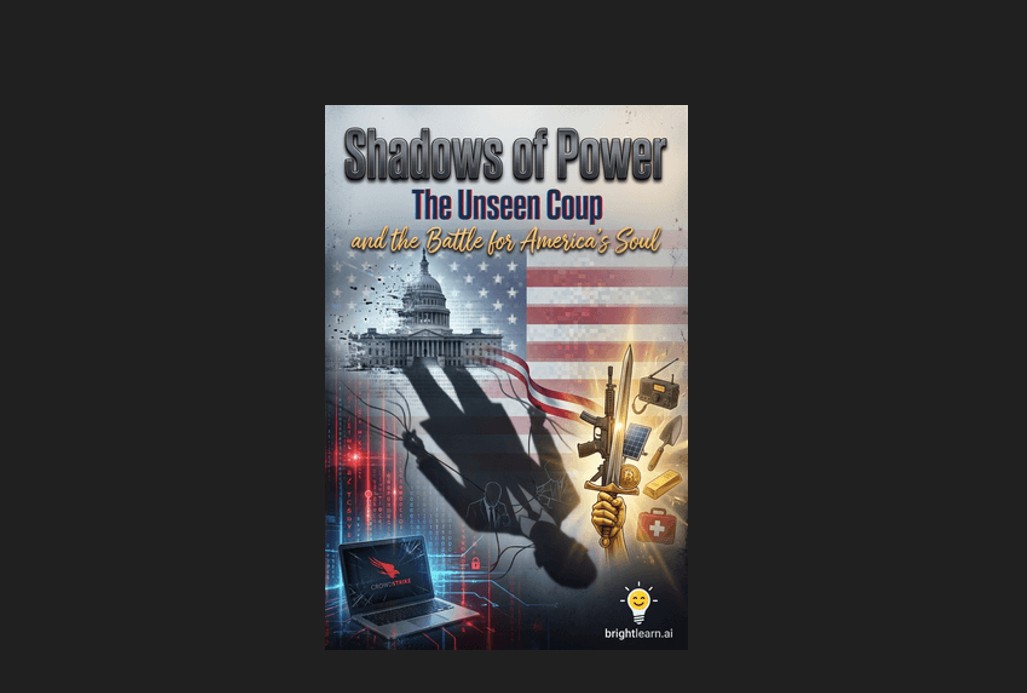
Shadows of Power: A deep dive into the hidden forces shaping America’s future
Kevin Hughes

Trump rejects Putin’s proposal to move Iran’s enriched uranium to Russia
Laura Harris

The open door: How U.S. tax dollars fund China’s military rise through academic partnerships
Ava Grace

Uber expands Women Preferences program nationwide amid safety concerns
Patrick Lewis
