© Brighteon.com All Rights Reserved. All content posted on this site is commentary or opinion and is protected under Free Speech. Brighteon is not responsible for comments and content uploaded by our users.

Here are some papers on the subject
ww.frontiersin.org/articles/10.3389/frsen.2021.745938/full
https://www.sciencedirect.com/science/article/abs/pii/S0021850202001581
Laser Weapons Will Turn Earth's Atmosphere Into Lenses, Deflector Shields
These huge round looking clouds are not a part of a planetary system,
At the Lagrange points, the gravitational forces of the two large bodies and the centrifugal force balance each other.[2] This can make Lagrange points an excellent location for satellites, as orbit corrections, and hence fuel requirements, needed to maintain the desired orbit are kept at a minimum.
For any combination of two orbital bodies, there are five Lagrange points, L1 to L5, all in the orbital plane of the two large bodies. There are five Lagrange points for the Sun–Earth system, and five different Lagrange points for the Earth–Moon system. L1, L2, and L3 are on the line through the centers of the two large bodies, while L4 and L5 each act as the third vertex of an equilateral triangle formed with the centers of the two large bodies.
When the mass ratio of the two bodies is large enough, the L4 and L5 points are stable points meaning that objects can orbit them, and that they have a tendency to pull objects into them. Several planets have trojan asteroids near their L4 and L5 points with respect to the Sun; Jupiter has more than one million of these trojans.
Some Lagrange points are being used for space exploration. Two important Lagrange points in the Sun-Earth system are L1, between the Sun and Earth, and L2, on the same line at the opposite side of the Earth; both are well outside the Moon's orbit. Currently, an artificial satellite called the Deep Space Climate Observatory (DSCOVR) is located at L1 to study solar wind coming toward Earth from the Sun and to monitor Earth's climate, by taking images and sending them back.[3] The James Webb Space Telescope, a powerful infrared space observatory, is located at L2.[4] This allows the satellite's large sunshield to protect the telescope from the light and heat of the Sun, Earth and Moon.
The European Space Agency's earlier Gaia telescope, and its newly launched Euclid, also occupy orbits around L2. Gaia keeps a tighter Lissajous orbit around L2, while Euclid follows a halo orbit similar to JWST. Each of the space observatories benefit from being far enough from Earth's shadow to utilize solar panels for power, from not needing much power or propellant for station-keeping, from not being subjected to the Earth's magnetospheric effects, and from having direct line-of-sight to Earth for data transfer
A space sunshade or sunshield is a parasol that diverts or otherwise reduces some of the Sun's radiation, preventing it from hitting a spacecraft or planet and thereby reducing its insolation, which results in reduced heating. Light can be diverted by different methods. The concept of the construction of sunshade as a method of climate engineering dates back to the years 1923, 1929, 1957 and 1978 by the physicist Hermann Oberth.[1][2][3][4] Space mirrors in orbit around the Earth with a diameter of 100 to 300 km, as designed by Hermann Oberth, are intended to focus sunlight on individual regions of the Earth’s surface or deflect it into space so that the solar radiation is weakened in a specifically controlled manner for individual regions on the Earth’s surface. First proposed in 1989, another space sunshade concept involves putting a large occulting disc, or technology of equivalent purpose, between the Earth and Sun.
A sunshade is of particular interest as a climate engineering method for mitigating global warming through solar radiation management. Heightened interest in such projects reflects the concern that internationally negotiated reductions in carbon emissions may be insufficient to stem climate change.[5][6] Sunshades could also be used to produce space solar power, acting as solar power satellites. Proposed shade designs include a single-piece shade and a shade made by a great number of small objects. Most such proposals contemplate a blocking element at the Sun-Earth L1 Lagrangian point.
👉 ClimateViewer
https://www.youtube.com/c/JimLee-ClimateViewer/videos
Shared from and subscribe to:
Alaska Sky Watcher
https://www.youtube.com/@alaskaskywatcher/videos

New impurity found in knockoff Zepbound forces safety warning from Eli Lilly
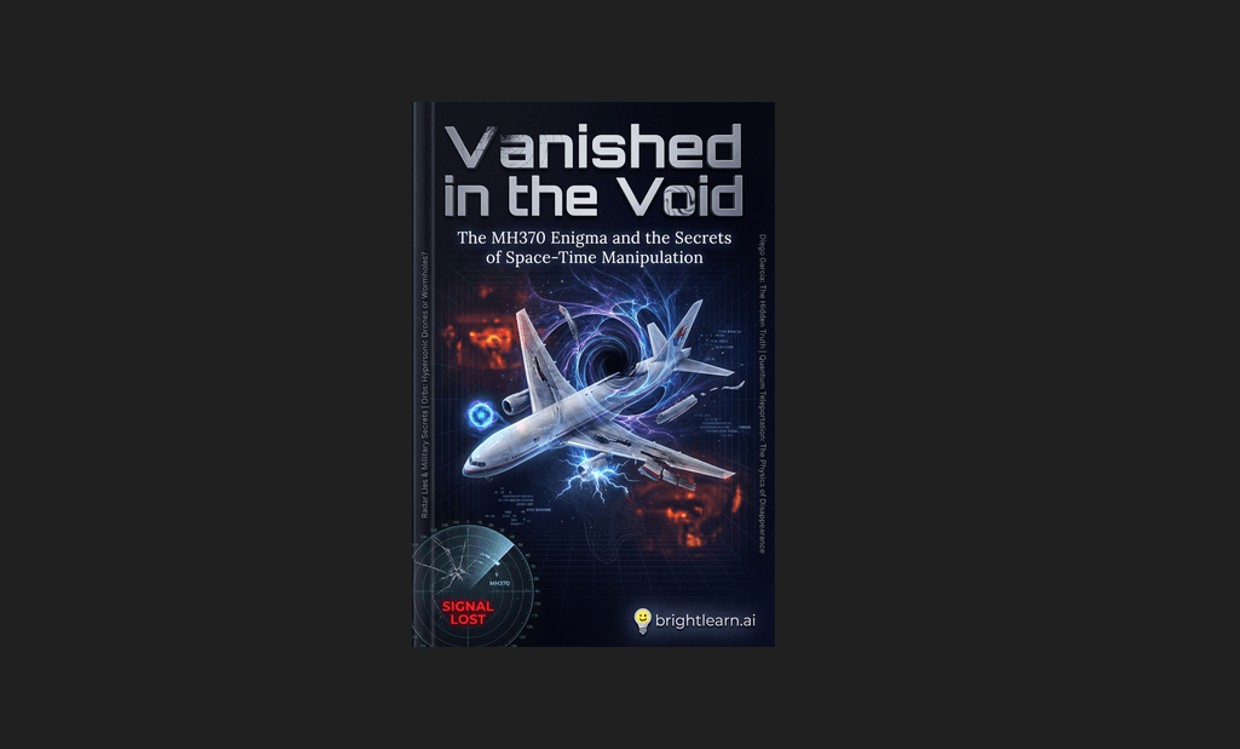
Vanished in the Void: The MH370 cover-up and the hidden war over advanced space-time technology

Exercise emerges as a powerful natural remedy for menopausal symptoms

“A.G.E.S. Fall Conference” on BrightU: The ancient nasal technique that helps melt arterial plaque and rewire your biology

Landmark study reveals slowing your body’s true age can drastically cut stroke risk

The Unstoppable Code: The war on human biology and Japan’s resistance
