© Brighteon.com All Rights Reserved. All content posted on this site is commentary or opinion and is protected under Free Speech. Brighteon is not responsible for comments and content uploaded by our users.

Narrated video of the visual assets (2nd edition) for the book: "Generative AI Unleashed" published on https://books.brightlearn.ai/Generative-AI-Unleashed-The-Essential-Guide-to-Programs-187ea5876-En/index.html
The narrated video slides are in order and correlate to the chapters and subchapters of the book.
See "Chapters" section below for the complete narration script
Artificially Yours playlist: https://suno.com/playlist/0d8e0603-0365-46ac-baa0-018351400c83
Disclaimer Notice
The information contained in this companion video and book, "Generative AI Unleashed: Programs, Platforms and Mastery," is for educational and informational purposes only. The field of generative AI evolves rapidly; therefore, the author /publisher make no representations or warranties regarding the completeness, accuracy, reliability, or suitability of the information regarding specific programs, platforms, features, pricing, or legal/ethical frameworks described herein. The mention of any specific product, service, or company does not constitute an endorsement.
Readers are solely responsible for their use of any AI tools and for ensuring their compliance with all applicable laws, licensing agreements, intellectual property rights, and organizational policies. The outputs generated by AI systems can contain biases, inaccuracies, or sensitive content, and should be critically evaluated. The author/publisher disclaims all liability for any direct, indirect, or consequential loss or damage arising from the use of this companion video and book or reliance on its content. This companion video and book is a starting point for knowledge and mastery, not a substitute for professional advice.
© All rights reserved, Motts Media
CHAPTER 1: UNDERSTANDING GENERATIVE AI FUNDAMENTALS
[SLIDE 1.0 - Traditional AI vs Generative AI Split Visual]
Welcome to Generative AI Unleashed. This opening visual captures the fundamental transformation happening in artificial intelligence today. On the left, you see traditional AI represented by orderly geometric circuits and flowcharts. These systems follow rigid, predefined rules, processing inputs through explicit algorithms. On the right, those same circuits blossom into vibrant, abstract patterns and fractals, representing generative AI's ability to create, innovate, and produce entirely new content. The central arrow symbolizes this revolutionary evolution from analysis to creation.
[SLIDE 1.1 - Two-Column Comparison Chart]
This comparison chart illustrates the core difference between traditional and generative AI. Traditional AI excels at analysis and classification. It uses tools like magnifying glasses to examine data, funnels to sort and categorize information, and checkmarks to validate outcomes. Generative AI, by contrast, focuses on creation and synthesis. It wields paintbrushes to create landscapes, generates new text in speech bubbles, and produces music from waveforms. While traditional AI tells you what something is, generative AI creates what could be.
[SLIDE 1.2 - AI Evolution Timeline]
This timeline traces AI's remarkable journey as a rising path through three distinct eras. At the foundation, we find rule-based systems from the nineteen fifties through nineteen eighties, represented by rigid flowcharts following if-then logic. The path ascends to machine learning from the nineteen nineties through twenty tens, shown as a learning curve where systems improve through data exposure. At the peak stands generative AI from twenty twenty onward, depicted as a glowing neural network emitting sparks of paint, text, and music. This visual journey shows how AI evolved from following instructions to learning patterns to creating original content.
[SLIDE 1.3 - Deep Learning Layers Diagram]
This layered diagram reveals the architecture behind generative AI's creative power. At the base, simple connected circles represent individual neurons, the fundamental building blocks. Multiple layers stack upward, becoming increasingly complex with denser connections. At the top, the network transforms a simple text input like the word "cat" into a fully realized image. The arrows indicate deep learning as the process of stacking these layers. Each layer extracts increasingly abstract features, from basic edges to complex concepts, enabling the generation of sophisticated outputs.
[SLIDE 1.4 - Key Terminology Infographic]
Understanding AI requires mastering its vocabulary. This infographic connects four essential concepts. Training data, shown as books and images flowing into a chip, represents the raw material that teaches AI. The model, depicted as a brain-like engine, is the trained system that processes information. Parameters, visualized as tiny dials and sliders inside the engine, are the adjustable values that shape the model's behavior. Finally, tokens, represented as puzzle pieces forming text and image fragments, are the discrete units the AI generates as output. Together, these elements form the complete picture of how AI learns and creates.
[SLIDE 1.5 - Training Data as Sculptor Visual]
This artistic metaphor powerfully illustrates data's role in shaping AI. A sculptor labeled "Training Data" works on a formless clay lump representing the base model. Through careful shaping, the clay transforms into a detailed, recognizable statue representing the trained model. Light rays labeled "Patterns and Relationships" shine from reference images onto the clay, showing how training data illuminates the patterns that guide the model's development. Just as a sculptor's skill determines the statue's quality, training data quality determines AI output quality.
[SLIDE 1.6 - Convergence of Factors Visual]
Why is generative AI transforming industries now? This visual shows four interlocking gears representing the factors that aligned to create the AI boom. The first gear represents massive data availability from our increasingly digital world. The second represents advanced algorithms like transformers and diffusion models. The third represents unprecedented compute power from modern GPUs. The fourth represents widespread digital tool adoption across society. Where all four gears mesh together, a brilliant glow emerges labeled "Generative AI Boom." No single factor alone could have triggered this revolution.
[SLIDE 1.7 - Real-World Applications Collage]
Generative AI is already reshaping how we work and create. This collage showcases four diverse applications. A designer uses AI art tools to generate concept art and visual assets. A writer receives AI text suggestions to enhance productivity and overcome creative blocks. A scientist views AI-generated molecular structures, accelerating drug discovery and research. A marketer analyzes AI-created campaign variations to optimize messaging. These examples represent just a fraction of generative AI's transformative potential across industries.
[SLIDE 1.8 - Democratizing Creation Visual]
This before-and-after metaphor captures AI's democratizing power. Before generative AI, a high gated wall labeled "Technical Skill" and "Cost" blocked access to creative tools. Only one person on a tall ladder could reach the top. After generative AI, that wall has become a low, accessible step. A diverse group of people walks over it together, tools in hand. Barriers that once required years of training or expensive software have fallen. Creativity is now accessible to everyone willing to learn.
[SLIDE 1.9 - Ethical Landscape Scales Visual]
With great power comes great responsibility. This balanced scale represents the ethical considerations surrounding AI. On one pan sit the challenges: bias shown as skewed data, ownership questions marked by question marks on artwork, and misinformation depicted as distorted news. On the other pan sit the principles we must uphold: fairness represented by balanced gears, transparency shown as a clear lens, and accountability depicted as a protective shield. Maintaining balance between innovation and responsibility is essential for AI's beneficial development.
CHAPTER 2: EXPLORING GENERATIVE AI TOOLS AND PLATFORMS
[SLIDE 2.0 - Digital Workbench Visual]
Welcome to Chapter Two. This digital workbench represents the diverse toolkit available to AI creators today. Different panels light up showing previews of AI-generated content: a text document with flowing prose, a vibrant painting with rich colors, syntactically highlighted code, and a dynamic video clip. Each panel shimmers with an AI-generated quality, indicating these outputs were created not by traditional means but through generative intelligence. This workbench is your creative command center.
[SLIDE 2.1 - Text Generation Robot Avatars]
Meet the personalities of text generation AI. Three stylized robot avatars represent different model capabilities. The first, in lavender tones with a quill emblem, generates poetic, creative text with artistic flair. The second, in green with code brackets, produces concise, functional programming code. The third, in blue with a book emblem, crafts long-form articles and comprehensive documentation. Speech bubbles above each show their characteristic outputs. Understanding these distinctions helps you choose the right tool for each task.
[SLIDE 2.2 - Image Generation Styles Visual]
One prompt, infinite possibilities. A central input box displays the prompt "Astronaut riding a horse." Radiating outward are four dramatically different interpretations. The photorealistic version shows lifelike detail and accurate lighting. The oil painting version features rich brushstrokes and classical composition. The anime version presents stylized proportions and vibrant colors. The pixel art version offers nostalgic, retro charm. This demonstrates how style parameters transform identical prompts into vastly different creative outputs.
[SLIDE 2.3 - Emerging Frontiers Dashboard]
Beyond text and images, AI is conquering new creative frontiers. This next-generation dashboard displays three emerging capabilities. The audio panel shows a simple waveform morphing into a complex symphony, representing AI music and sound generation. The video panel shows a storyboard sketch animating into a polished clip, representing AI video creation. The code panel shows a plain text description transforming into syntax-highlighted code blocks, representing AI programming assistance. These frontiers are expanding rapidly.
[SLIDE 2.4 - Consumer Platform Interface]
Not everyone needs developer tools. This clean smartphone interface represents consumer-focused AI platforms designed for accessibility. A prominent text prompt field invites creativity. Large, friendly buttons offer options to generate, surprise me, or share. Preview thumbnails show appealing, simple outputs. This design philosophy prioritizes ease of use, making AI accessible to beginners without technical backgrounds. The barrier to entry has never been lower.
[SLIDE 2.5 - Developer IDE Visual]
For professionals, power and flexibility matter. This sophisticated desktop IDE shows the developer experience. Code on the left displays API calls with customizable parameters. Rich outputs on the right show generated images and structured text. Graphs for tuning temperature and steps allow fine-grained control over creativity and quality. This environment offers the customization and precision that professional workflows demand.
[SLIDE 2.6 - Integrated Creative Suite Visual]
AI doesn't replace existing tools; it enhances them. This screenshot shows familiar design software with new AI-powered buttons highlighted. Generative fill allows intelligent content-aware editing. Text rewrite offers instant copy improvements. An AI assistant provides contextual suggestions. These features integrate seamlessly within existing toolbars, augmenting workflows professionals already know. The best AI disappears into the background, amplifying human capability.
[SLIDE 2.7 - Marketing Vision Board]
For marketers, AI is a campaign multiplier. This vision board shows interconnected assets all themed around a product launch. AI generates social media post variants optimized for different platforms. A blog header image maintains brand consistency. Email subject line options offer A/B testing possibilities. A draft blog article provides a foundation for human refinement. All assets share consistent theming, demonstrating AI's ability to maintain brand coherence across channels.
[SLIDE 2.8 - Design Workflow Visual]
This three-step workflow shows AI's role in professional design. Step one presents a mood board with AI-generated concept art establishing direction and inspiration. Step two shows AI-generated mockups of a website displayed across different devices, enabling rapid prototyping. Step three reveals the final polished UI with AI-generated icons and illustrations integrated into the layout. AI accelerates every phase from ideation through execution.
[SLIDE 2.9 - Software Development AI Visual]
AI is transforming how we write code. This split screen shows AI-assisted development in action. On the left, a comment reads "function to validate user login." On the right, ghostly AI hands have written the complete code block below it. A second AI bubble suggests documentation improvements and highlights a potential security bug. This represents the future of programming: human intent guiding AI execution, with intelligent assistance catching errors before they ship.
CHAPTER 3: MASTERING GENERATIVE AI FOR EFFECTIVE USE
[SLIDE 3.0 - Human-AI Collaboration Hands]
Chapter Three explores mastery through collaboration. This powerful image shows a human hand and a robotic hand working together on a canvas. The human hand guides direction, providing creative vision and intent. The robotic hand applies precise, detailed strokes, executing with tireless accuracy. Neither hand works alone; together they create something neither could achieve independently. This is the essence of human-AI collaboration: human creativity amplified by machine capability.
[SLIDE 3.1 - Prompt Engineering Flashlights]
Effective prompting illuminates AI's potential. Three flashlights demonstrate key principles. The first, representing clarity, casts a focused beam revealing a single clear object. Specific prompts yield specific results. The second, representing context, casts a wider beam showing the object's environment. Background information helps AI understand your needs. The third, representing constraints, uses a stencil overlay to shape light into a specific form. Boundaries guide AI toward desired outputs. Master these three principles to unlock AI's full potential.
[SLIDE 3.2 - Advanced Prompt Techniques Flowchart]
This flowchart shows prompt evolution in action. Version one, a simple prompt like "a dog," produces generic output. Version two adds specificity: "a fluffy Samoyed in a sunlit meadow" yields dramatically better results. Arrows show advanced techniques: style transfer adds artistic direction like "in Van Gogh style," while prompt chaining uses one output as input for the next. Iteration transforms basic prompts into sophisticated creative instructions.
[SLIDE 3.3 - Prompting Swiss Army Knife]
Different modalities require different approaches. This Swiss Army knife labeled "Prompting" extends three specialized tools. The pen for text generation sits beside keywords: tone, format, length, and style. The brush for image generation accompanies: medium, lighting, composition, and color palette. The musical note for audio generation connects to: genre, tempo, mood, and instruments. Like a Swiss Army knife, effective prompting requires selecting the right tool for each task.
[SLIDE 3.4 - Ideation Mind Map]
AI excels as a brainstorming partner. This mind map shows a central node labeled "New Product Idea." AI, depicted as a sparking lightbulb, generates diverse branch ideas: eco-friendly, gamified, subscription model, mobile-first, and more. A human hand circles and connects promising concepts. AI generates possibilities; humans curate and combine them. This collaborative ideation process produces more creative outcomes than either party working alone.
[SLIDE 3.5 - Critical Loop Diagram]
Quality requires iteration. This cyclical diagram shows four essential stages. First, the human writes a prompt. Second, AI generates output. Third, the human edits and critiques the result. Fourth, the human refines the prompt based on learnings. The cycle repeats, with output improving each revolution. This critical loop transforms rough drafts into polished results. Patience and persistence in this process separate novices from masters.
[SLIDE 3.6 - Creative Vision Compass]
Never lose sight of your creative north star. This compass shows the human hand firmly holding the needle, representing intent and authenticity. The ornate compass base and bezel represent AI, providing execution and scale. The caption reads: "AI is the tool, you are the navigator." Technology amplifies direction but cannot provide it. Your creative vision must guide every AI interaction. Stay true to your authentic voice.
[SLIDE 3.7 - Key Challenges Warning Signs]
The path forward includes obstacles. Three warning signs mark common pitfalls. The first, labeled bias, shows a distorted mirror reflecting skewed data. AI can perpetuate and amplify existing prejudices. The second, labeled hallucinations, shows a convincing yet impossible creature. AI can generate plausible-sounding falsehoods with complete confidence. The third, labeled copyright, shows overlapping paintings with a question mark. Ownership of AI-generated content remains legally ambiguous. Awareness of these challenges enables responsible navigation.
[SLIDE 3.8 - Responsible AI Badge]
Responsible creation requires commitment. This badge labeled "Responsibly Created" rests on three pillars. Disclosure, shown as a speech bubble reading "AI-assisted," means transparency about AI involvement. Attribution, shown as a tag crediting sources, means acknowledging influences and training data origins. Ethical creation, shown as a checklist with fairness and harmlessness, means considering impact on others. Wearing this badge means committing to responsible AI practices.
[SLIDE 3.9 - Future-Proofing Staircase]
Your AI journey is just beginning. A person climbs a spiral staircase ascending into clouds representing the future. The steps are labeled with your path forward: learn fundamentals, experiment boldly, stay curious, adapt continuously, and specialize strategically. The railing flows with evolving AI models and tools, representing the constant change in this field. The climb requires effort, but each step elevates your capabilities. The future belongs to those who keep climbing.

Texas Governor Directs Review of Chinese-Made Medical Device Cybersecurity

“A.G.E.S. Fall Conference” on BrightU: Why your thyroid medication ignores what your body actually needs

Study finds surge in AI use in scientific papers but little disclosure by researchers
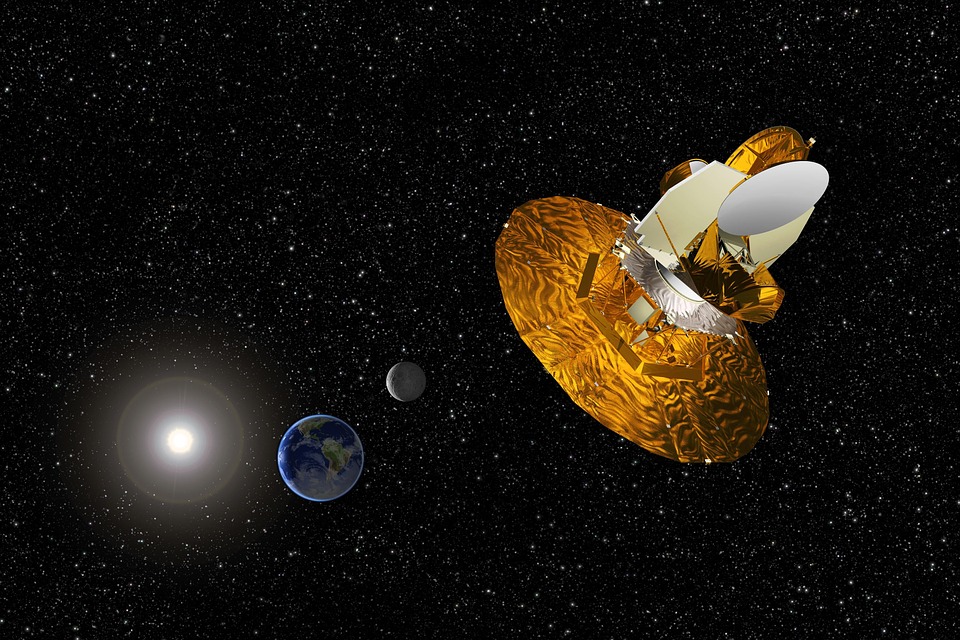
NASA’s Van Allen Probe A plunges to Earth, closing a chapter on radiation belt mysteries critical for moon missions

New impurity found in knockoff Zepbound forces safety warning from Eli Lilly
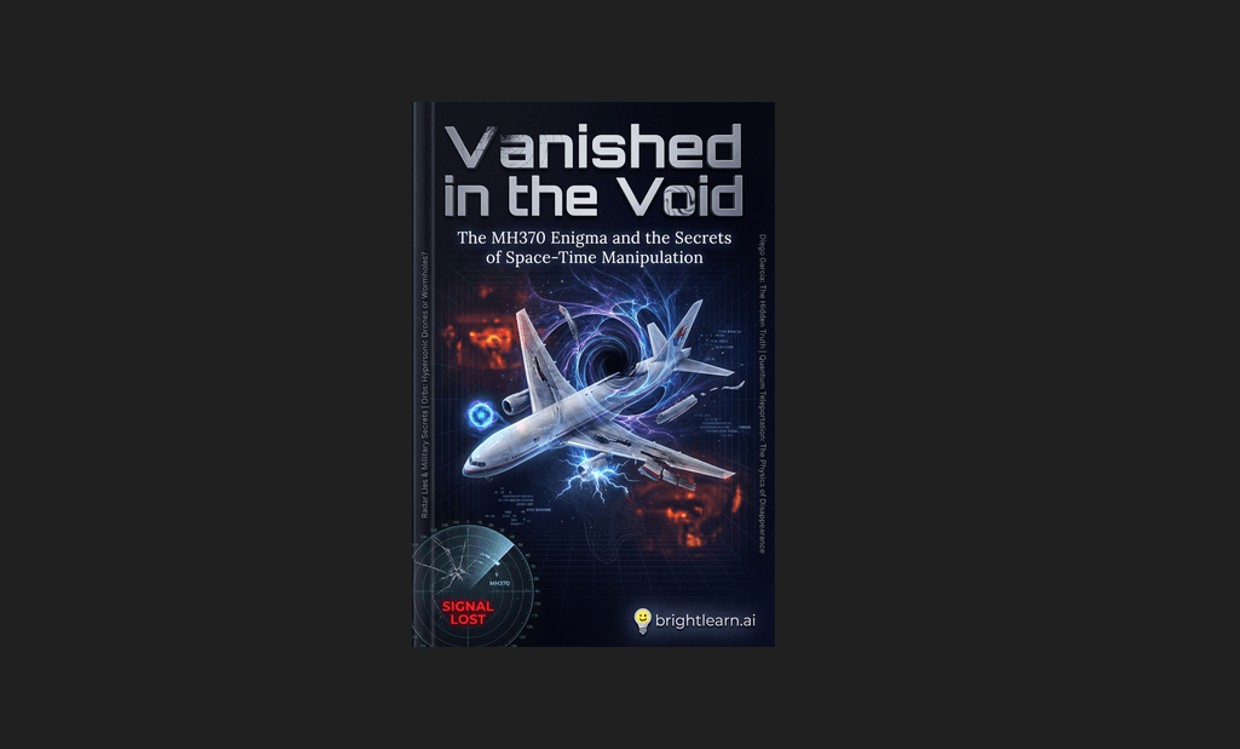
Vanished in the Void: The MH370 cover-up and the hidden war over advanced space-time technology
