© Brighteon.com All Rights Reserved. All content posted on this site is commentary or opinion and is protected under Free Speech. Brighteon is not responsible for comments and content uploaded by our users.


This channel has partnered with the Brighteon Store and receives a small commission from all sales generated from an affiliate link.
Click the shop now button below to help out this channel.
Check out Whitney Webb's bestselling book exposing the criminal rise of Jeffrey Epstein (One Nation Under Blackmail): https://amzn.to/4kcNCdI
Credit to Kim Iversen News for their great interview with Whitney Webb.
Power, technology, and finance converge in this explosive discussion of elite influence—from Wall Street boardrooms to Silicon Valley data empires. The conversation revisits the role of Jamie Dimon at JPMorgan Chase, examining claims about how billionaire networks, including the Crown family and Leslie Wexner, shaped leadership transitions that ultimately positioned Dimon at the helm following the Bank One merger. Against that backdrop sits the bank’s highly scrutinized relationship with Jeffrey Epstein, whose long-standing ties to financial and political elites resurfaced in litigation alleging institutional negligence. The deeper argument is not merely about individual misconduct, but about systemic protection—how concentrated capital shields itself from meaningful accountability.
From there, the lens widens. The digital era has transformed blackmail, surveillance, and leverage from analog scandal to algorithmic omniscience. Figures such as Elon Musk, Sergey Brin, and venture capital power broker Peter Thiel are discussed not as isolated personalities, but as nodes within a fused public–private intelligence architecture. Platforms once framed as liberating are now recast as instruments of data centralization—where financial services, speech governance, and artificial intelligence merge into a single infrastructure of influence. The ambition to transform X into a “WeChat-style” super app echoes China’s model of digital integration, raising questions about whether Western societies are quietly embracing technocratic management under a libertarian marketing banner.
The concept of technocracy itself—rule by technical elites guided by algorithmic systems—moves from theory to practice as AI increasingly mediates governance. References to works by Eric Schmidt and Henry Kissinger underscore the elite consensus forming around AI’s eventual integration into state decision-making. When governance becomes code and code is owned by corporations, democratic accountability risks becoming secondary to proprietary control. Surveillance platforms like Palantir Technologies—with origins intertwined with national security—represent a privatized evolution of earlier intelligence programs, embedding mass data analysis deep within the architecture of modern governance.
Mirrored - Investigative Insights TV
-------------
To survive what is coming, read/study: https://thewayhomeorfacethefire.net
The Gibraltar Messenger : https://gibraltar-messenger.net/
Christ is KING!
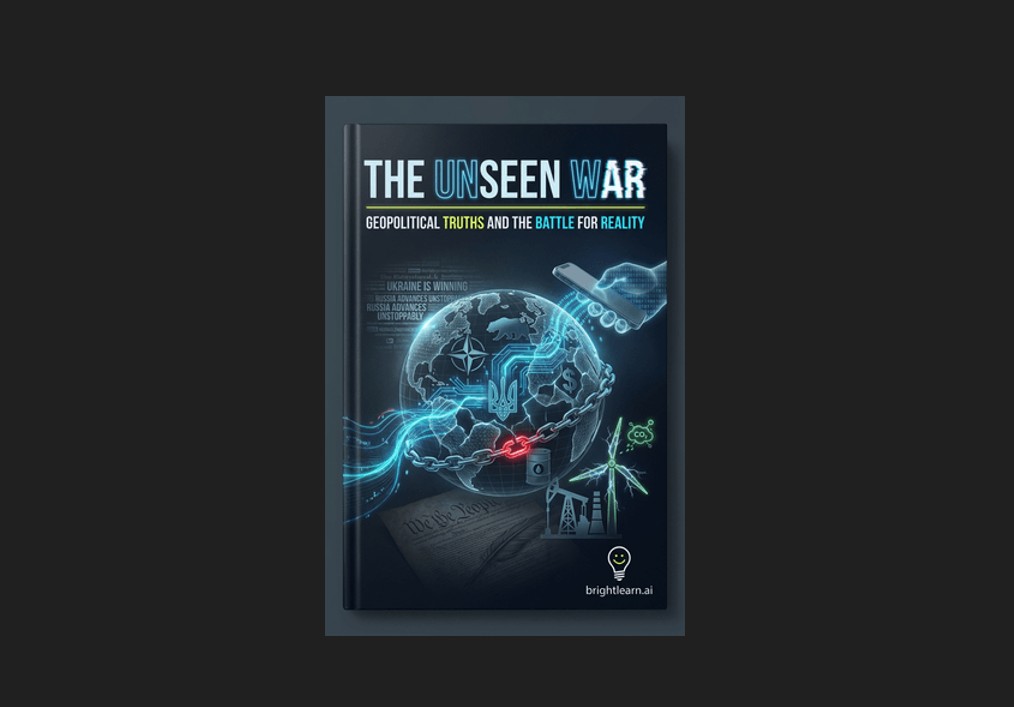
The Unseen War: Exposing the globalist agenda behind Ukraine, energy sabotage and the collapse of freedom

Israel Expels Spain from Gaza Coordination Center Following Criticism of Lebanon Operations

China’s Electric Vehicle Exports Reach Record High Amid Fuel Price Surge

Engineered Winter: A chilling expose on the silent war above us

Iran Limits Strait of Hormuz Transits to Friendly Vessels, Tankers Queue

U.S. Announces Hormuz Blockade, Considers Limited Strikes After Iran Talks Fail
