© Brighteon.com All Rights Reserved. All content posted on this site is commentary or opinion and is protected under Free Speech. Brighteon is not responsible for comments and content uploaded by our users.
Permaculture Design Course 2021 (Geoff Lawton) - 2.5 – Designing to Catch and Store Energy // 2.6 -- Resources

553 followers
Follow
2
Share
Report
122 views • 03/25/2021
2.5 – Designing to Catch and Store Energy
In our designs, we seek to store and extend energy through connecting life-rich systems from energy sources (coming onto the property) to energy sinks (leaving the property). There are many potential ways of stopping, slowing, spreading, absorbing, and then reabsorbing energy and resources. If we trap water high in the landscape, it can supply life lower down, stabilizing the system with forests, pastures, and finally crops. Then, where possible, we can use simple, renewable wind energy to send the water back up to the high point of the system so that it cycles through again. This is how we make the most of our energy and resources.
-------------------------------------
2.6 – Resources
Learning Objectives -- At the end of the video you should be able to:
- Argue the meaning of progress (as misunderstood by society)
- Identify and categorize different resources used responsibly in permaculture systems
- Describe the different categories of resources
Brief Overview:
In permaculture, we use our resources responsibly. Many of them are intrinsic, such as the sun, wind, rain, and landscape. Others are living, such as animals and plants. Some are created by us. When we can create a surplus of resources, we get a yield, but we can only get there continually by using the resources we have conservatively. Again, this how ethics work in our systems.
There are many categories of resources. Some increase when used, such as bushes and fruit trees growing more abundantly after being pruned. Others, like water flows or wind, aren’t really affected by us using them. Beyond that, there are resources that degrade when not used (such as an annual garden) or reduce through use (old growth forest or fossil fuels) or pollute other resources (pesticides and chemicals).
Society has come to misunderstand progress. Progress does not degrade resources, and development does not use up finite resources. Progress and development come when good design creates endless supply lines through living systems, adapting neither an overabundance nor lack of surplus but finding the right balance of enough.
Key Takeaways:
- There are many types of resources, and the way we utilize each different type is critical.
- Some resources can be used modestly and actually increase: fruit trees, bushes, domestic animals.
- Some resources are unaffected by our use of them: water flows, wind currents, a well-managed eco-system.
- Some resources degrade when they are not used: buildings, kitchen gardens.
- Some resources reduce through use: old growth forests, clay deposits, fossil fuels.
- Some resources pollute and destroy other resources: chemicals, radioactivity, pesticides.
- Progress is not as society currently sees it, which uses up finite resources and creates abundant waste.
- Instead, progress is the creation of systems that generate renewable supply lines.
-“Today’s luxuries are tomorrow’s disasters.”
In our designs, we seek to store and extend energy through connecting life-rich systems from energy sources (coming onto the property) to energy sinks (leaving the property). There are many potential ways of stopping, slowing, spreading, absorbing, and then reabsorbing energy and resources. If we trap water high in the landscape, it can supply life lower down, stabilizing the system with forests, pastures, and finally crops. Then, where possible, we can use simple, renewable wind energy to send the water back up to the high point of the system so that it cycles through again. This is how we make the most of our energy and resources.
-------------------------------------
2.6 – Resources
Learning Objectives -- At the end of the video you should be able to:
- Argue the meaning of progress (as misunderstood by society)
- Identify and categorize different resources used responsibly in permaculture systems
- Describe the different categories of resources
Brief Overview:
In permaculture, we use our resources responsibly. Many of them are intrinsic, such as the sun, wind, rain, and landscape. Others are living, such as animals and plants. Some are created by us. When we can create a surplus of resources, we get a yield, but we can only get there continually by using the resources we have conservatively. Again, this how ethics work in our systems.
There are many categories of resources. Some increase when used, such as bushes and fruit trees growing more abundantly after being pruned. Others, like water flows or wind, aren’t really affected by us using them. Beyond that, there are resources that degrade when not used (such as an annual garden) or reduce through use (old growth forest or fossil fuels) or pollute other resources (pesticides and chemicals).
Society has come to misunderstand progress. Progress does not degrade resources, and development does not use up finite resources. Progress and development come when good design creates endless supply lines through living systems, adapting neither an overabundance nor lack of surplus but finding the right balance of enough.
Key Takeaways:
- There are many types of resources, and the way we utilize each different type is critical.
- Some resources can be used modestly and actually increase: fruit trees, bushes, domestic animals.
- Some resources are unaffected by our use of them: water flows, wind currents, a well-managed eco-system.
- Some resources degrade when they are not used: buildings, kitchen gardens.
- Some resources reduce through use: old growth forests, clay deposits, fossil fuels.
- Some resources pollute and destroy other resources: chemicals, radioactivity, pesticides.
- Progress is not as society currently sees it, which uses up finite resources and creates abundant waste.
- Instead, progress is the creation of systems that generate renewable supply lines.
-“Today’s luxuries are tomorrow’s disasters.”
Keywords
FREE email alerts of the most important BANNED videos in the world
Get FREE email alerts of the most important BANNED videos in the world that are usually blacklisted by YouTube, Facebook, Google, Twitter and Vimeo. Watch documentaries the techno-fascists don't want you to know even exist. Join the free Brighteon email newsletter. Unsubscribe at any time. 100% privacy protected.
Your privacy is protected. Subscription confirmation required.
Recent News
Storm of Lies: A wake-up call to the engineered destruction of America
Kevin Hughes
The Apocalypse Pantry: Grow your own pharmacy before the supply chain collapses
Kevin Hughes
The calm prepper: Building a wellness pantry that lasts
HRS Editors
The Coming Storm: A wake-up call for the prepared mind
Kevin Hughes
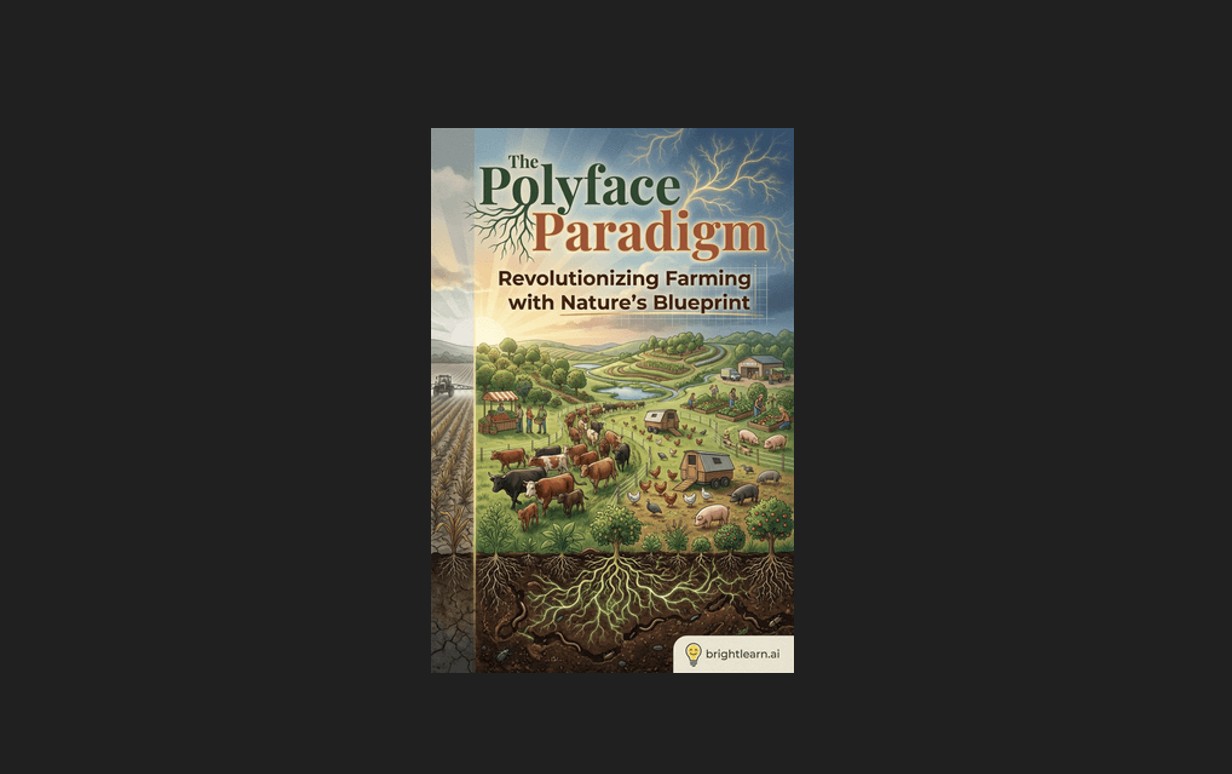
The Polyface Paradigm: A blueprint for regenerative farming and food freedom
Belle Carter
Brush Fires of Freedom: A survivalist’s manifesto for decentralization, resistance and the collapse of empire
Belle Carter
