© Brighteon.com All Rights Reserved. All content posted on this site is commentary or opinion and is protected under Free Speech. Brighteon is not responsible for comments and content uploaded by our users.
Follow Psinergy Here For Livestream & Biofield Practice Content: https://ko-fi.com/psinergy
.
https://www.dni.gov/files/documents/icotr/FactSheetEO12333RawSIGINTProcedures.pdf
https://www.cttso.gov/Subgroups/SCOS.html
https://en.wikipedia.org/wiki/Physiological_Signal_Based_Security
https://www.dhs.gov/science-and-technology/biosurveillance
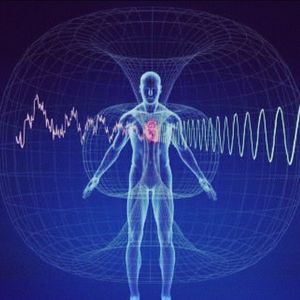
Intra-body communication, as a field of study, is relatively new, with its roots tracing back to 1996 when Thomas Guthrie Zimmerman first proposed Personal Area Networks (PAN) using near-field electrostatic coupling. This involved modulating electric fields and using the body's conductive properties to transmit data. The IEEE 802.15.6 standard, ratified in 2012, further formalized this concept with Human Body Communication (HBC), based on Zimmerman's ideas.
.
human digital twin technology
https://science.nasa.gov/biological-physical/why-does-the-world-and-nasa-need-digital-twins/
https://www.mdpi.com/1424-8220/23/8/3938
https://spectrum.ieee.org/fcc-gives-medical-body-area-networks-clean-bill-of-health
.
https://x.com/7SEES_/status/1896385479291142197
https://ntrs.nasa.gov/citations/20110012118
remote monitoring market share
https://en.wikipedia.org/wiki/Body_area_network
medical body area network
The Medical Implant Communication Service (MICS) was established by the Federal Communications Commission (FCC) in 1999. The FCC allocated the 402-405 MHz frequency band for MICS operations on a shared, secondary basis. In 2009, the FCC further expanded this by creating the Medical Device Radiocommunications Service (MedRadio), which incorporated the existing MICS spectrum and added additional spectrum
https://www.iec.ch/system/files/2023-10/wsdcombinedpdf_0.pdf

The gut-skin connection: New study suggests a simple dietary fiber could be a winter skin savior

Climate models and extreme weather: Why predictions often fail to match reality

Brazil study links PESTICIDE exposure to more aggressive breast cancer

The Android ID Trap: How Google’s Developer Registry Paves the Way for Digital Tyranny

The body’s whispered warnings: Decoding early diabetes signals

Orbs of Power: The terrifying truth behind UFOs and AI
