© Brighteon.com All Rights Reserved. All content posted on this site is commentary or opinion and is protected under Free Speech. Brighteon is not responsible for comments and content uploaded by our users.

Serbian President Aleksandar Vučić said he believes the United States could strike Iran within the next 48 hours, citing rising regional tensions.
"I expect a strike on Iran within the next 48 hours, along with some other major developments," Vučić said during an interview on Serbian television channel Pink.
"The conditions today are not easy. I am convinced that our commitment to preserving peace is of crucial importance."
Adding:
💬The Wall Street Journal reports that President Trump’s promised Middle East “armada” is now in place — led by the USS Abraham Lincoln carrier group, with F-35s repositioned closer to the region — but U.S. officials say airstrikes on Iran “aren’t imminent.”
The reason isn’t lack of capability. It’s air defense capacity.
U.S. officials say Washington could launch limited strikes immediately, but a “decisive” campaign would almost certainly trigger a proportional Iranian response, forcing the Pentagon to ensure it can protect Israel, Gulf partners, and U.S. bases for a potentially prolonged conflict.
That’s why the Pentagon is rushing in more interceptors: despite already having regional defenses (including destroyers able to shoot down aerial threats), the U.S. is deploying an additional THAAD battery and more Patriot systems to bases across Jordan, Kuwait, Bahrain, Saudi Arabia, and Qatar. THAAD targets ballistic missiles at high altitude, while Patriots cover lower-altitude threats.
As one former U.S. official bluntly summarized: “The air defense question is key—the extent to which we have sufficient materiel to ensure that our troops and assets in the region are going to be protected from some kind of Iranian retaliation.”
Recent experience has reinforced that concern. During the June conflict, Iran’s response to the U.S. “Midnight Hammer” strike included 14 missiles fired at Al Udeid Air Base in Qatar. Patriots “largely blocked” the attack, but the Pentagon later admitted one missile still struck the base — a reminder that even heavy defenses don’t guarantee full protection.
A wider U.S. air campaign, analysts warn, would invite Tehran to use the full range of tools available: short- and midrange ballistic missiles, drones, and regional allied forces. One U.S. commander stressed that “Midnight Hammer” was limited by design: “It was like a play in a game. It wasn’t the game writ large.”
The core issue is that Iran doesn’t need to “win the air” to impose costs — it only needs to force the U.S. and its partners into a sustained, expensive intercept war. And that war has limits. The Journal notes THAAD batteries are scarce (only seven operational), and the U.S. has already burned through large numbers of interceptors in recent defenses. As Seth Jones put it: “It is expensive to move Patriots and THAADs. The probability that they’re going to be used starts to go up” when deployments reach this scale.
Even production surges won’t help immediately: the Pentagon and Lockheed announced plans to ramp THAAD interceptor output from 96 to 400 per year, but the Journal notes it won’t make a difference in the coming weeks if conflict erupts.
In short, the U.S. buildup is real — but the decisive factor isn’t aircraft carriers or stealth jets. It’s whether Washington can sustain the air-defense burden of an escalation with Iran, a country that has already demonstrated it can strike back and adapt.
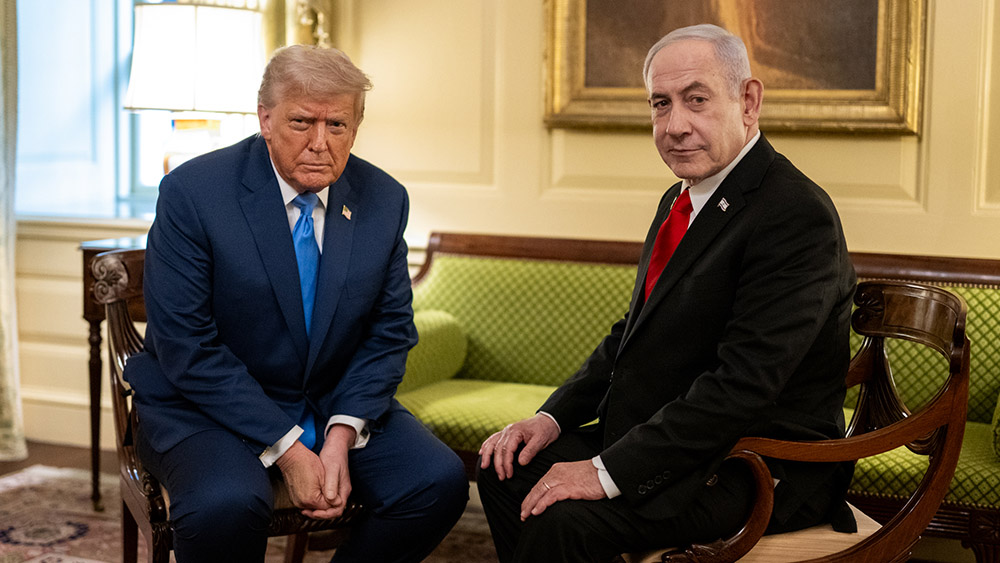
Trump claims he “forced Israel’s hand” in Iran conflict, warns of escalation

Humanity’s Final Exam: We Are Failing the Test of Survival

The White House’s War on Iran: A Catastrophic Failure of Foresight That Will Plunge the West Into Economic Ruin

How MAGA Became an Obedience Cult of Mindless Idiots
Seismic swarm at secret Nevada base coincides with Trump’s expanding Iran conflict

CIA arming Kurdish forces to spark uprising against Iran, raising fears of wider conflict
