© Brighteon.com All Rights Reserved. All content posted on this site is commentary or opinion and is protected under Free Speech. Brighteon is not responsible for comments and content uploaded by our users.
News Archive: NASA Apollo 1 Fire (January 27, 1967)

1620 followers
Follow
0
Download MP3
Share
Report
66 views • August 27, 2020
News Archive: NASA Apollo 1 Fire (January 27, 1967)
Apollo 1 Fire: Jules Bergman, Reporting ABC News
Plugs-out test
Chaffee, White, and Grissom training in a simulator of their command module cabin, January 19, 1967
According to the Board, Grissom suffered severe third-degree burns on over one-third of his body and his spacesuit was mostly destroyed. White suffered third-degree burns on almost half of his body and a quarter of his spacesuit had melted away. Chaffee suffered third-degree burns over almost a quarter of his body and a small portion of his spacesuit was damaged. The autopsy report confirmed that the primary cause of death for all three astronauts was cardiac arrest caused by high concentrations of carbon monoxide. Burns suffered by the crew were not believed to be major factors, and it was concluded that most of them had occurred postmortem. Asphyxiation occurred after the fire melted the astronauts' suits and oxygen tubes, exposing them to the lethal atmosphere of the cabin.
The launch simulation on January 27, 1967, on pad 34, was a "plugs-out" test to determine whether the spacecraft would operate nominally on (simulated) internal power while detached from all cables and umbilicals. Passing this test was essential to making the February 21 launch date. The test was considered non-hazardous because neither the launch vehicle nor the spacecraft was loaded with fuel or cryogenics, and all pyrotechnic systems (explosive bolts) were disabled.
At 1:00 pm EST (1800 GMT) on January 27, first Grissom, then Chaffee, and White entered the command module fully pressure-suited, and were strapped into their seats and hooked up to the spacecraft's oxygen and communication systems. Grissom immediately noticed a strange odor in the air circulating through his suit which he compared to "sour buttermilk", and the simulated countdown was put on hold at 1:20 pm, while air samples were taken. No cause of the odor could be found, and the countdown was resumed at 2:42 pm. The accident investigation found this odor not to be related to the fire.
Copyright Disclaimer under section 107 of the Copyright Act of 1976, allowance is made for “fair use” for purposes such as criticism, comment, news reporting, teaching, scholarship, education and research. Fair use is a use permitted by copyright statute that might otherwise be infringing.
See more at:
➤ Blog: https://truthernetwork.weebly.com
➤ Bitchute: https://www.bitchute.com/channel/truthernetwork/
➤ Brighteon: https://www.brighteon.com/channels/truthernetwork
➤ DLive: https://dlive.tv/truthernetwork [Inactive..., Help Us - We need 200 followers]
➤ Twitch: https://www.twitch.tv/truthernetwork
Apollo 1 Fire: Jules Bergman, Reporting ABC News
Plugs-out test
Chaffee, White, and Grissom training in a simulator of their command module cabin, January 19, 1967
According to the Board, Grissom suffered severe third-degree burns on over one-third of his body and his spacesuit was mostly destroyed. White suffered third-degree burns on almost half of his body and a quarter of his spacesuit had melted away. Chaffee suffered third-degree burns over almost a quarter of his body and a small portion of his spacesuit was damaged. The autopsy report confirmed that the primary cause of death for all three astronauts was cardiac arrest caused by high concentrations of carbon monoxide. Burns suffered by the crew were not believed to be major factors, and it was concluded that most of them had occurred postmortem. Asphyxiation occurred after the fire melted the astronauts' suits and oxygen tubes, exposing them to the lethal atmosphere of the cabin.
The launch simulation on January 27, 1967, on pad 34, was a "plugs-out" test to determine whether the spacecraft would operate nominally on (simulated) internal power while detached from all cables and umbilicals. Passing this test was essential to making the February 21 launch date. The test was considered non-hazardous because neither the launch vehicle nor the spacecraft was loaded with fuel or cryogenics, and all pyrotechnic systems (explosive bolts) were disabled.
At 1:00 pm EST (1800 GMT) on January 27, first Grissom, then Chaffee, and White entered the command module fully pressure-suited, and were strapped into their seats and hooked up to the spacecraft's oxygen and communication systems. Grissom immediately noticed a strange odor in the air circulating through his suit which he compared to "sour buttermilk", and the simulated countdown was put on hold at 1:20 pm, while air samples were taken. No cause of the odor could be found, and the countdown was resumed at 2:42 pm. The accident investigation found this odor not to be related to the fire.
Copyright Disclaimer under section 107 of the Copyright Act of 1976, allowance is made for “fair use” for purposes such as criticism, comment, news reporting, teaching, scholarship, education and research. Fair use is a use permitted by copyright statute that might otherwise be infringing.
See more at:
➤ Blog: https://truthernetwork.weebly.com
➤ Bitchute: https://www.bitchute.com/channel/truthernetwork/
➤ Brighteon: https://www.brighteon.com/channels/truthernetwork
➤ DLive: https://dlive.tv/truthernetwork [Inactive..., Help Us - We need 200 followers]
➤ Twitch: https://www.twitch.tv/truthernetwork
Keywords
FREE email alerts of the most important BANNED videos in the world
Get FREE email alerts of the most important BANNED videos in the world that are usually blacklisted by YouTube, Facebook, Google, Twitter and Vimeo. Watch documentaries the techno-fascists don't want you to know even exist. Join the free Brighteon email newsletter. Unsubscribe at any time. 100% privacy protected.
Your privacy is protected. Subscription confirmation required.
Recent News
The Renaissance Path: A radical blueprint for self-reliance in a broken system
Belle Carter
The Sun Cannot Be Taxed: Why Energy Freedom Is the Ultimate Form of Personal Liberty
Mike Adams
Shadows of Power: On the art and science of long-range shooting
Ramon Tomey
Buyer beware: Why even a trace of dioxins in your food is a cause for alarm
HRS Editors
Strategic storage: How “layered” prepping at home can save critical seconds in an emergency
Zoey Sky
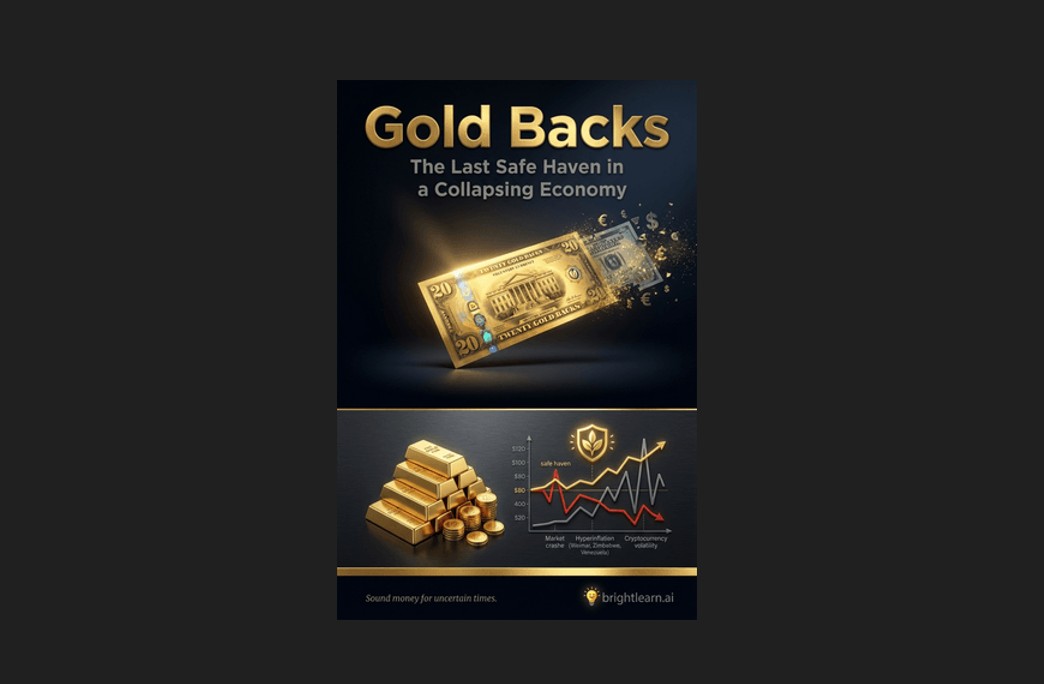
Gold Backs: The survivalist’s ultimate hedge amid dollar demise
Kevin Hughes
